Coastal Report
Researchers find first evidence of life in Earth's mantle under the Atlantic Ocean
Rock samples from an underwater mountain in the Atlantic Ocean could help to explain how early life formed on Earth, or on other planets.
In a 47-day expedition, researchers collected rock samples that reveal signs of life in the mantle of the ocean’s crust. The mantle rocks, which were collected by an international team using seabed rock drills, could provide clues about the reactions that fuel life in areas without sunlight, and the behaviour of carbon in such a setting.
The expedition was led by co-chief scientists Dr. Gretchen Früh-Green ETH Zurich, Switzerland and Dr. Beth Orcutt Bigelow Laboratory for Ocean Sciences, US. Researchers on the study pioneered the use of seabed rock drills from Germany and the UK, equipped with new technologies that allowed them to detect signs of life.
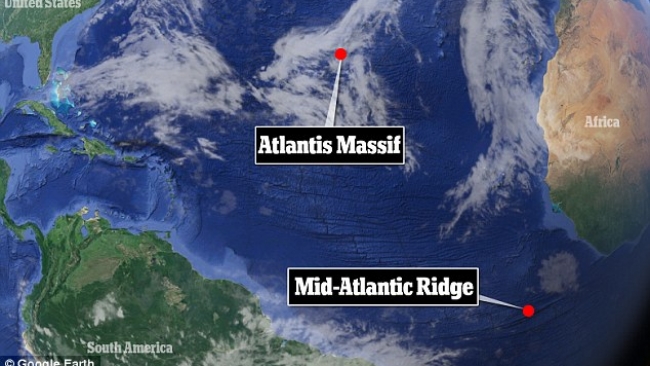
The team set out with the Rock Drill 2 from the British Geological Survey and the MeBo rock drill from MARUM in Bremen, Germany to collect the rock cores from a 4,000-m tall underwater mountain, the Atlantis Massif. Now, a ‘science party,’ has spent the past two weeks studying the findings at the International Ocean Discovery Project (IODP) at Bremen Core Repository in Bremen, Germany.
The samples from the shallow mantle show signs of life, along with indication of unique carbon cycling and ocean crust movement. By examining these rocks collected from the mantle of the ocean’s crust, scientists aim to determine how they end up at the seafloor, and how they react with seawater. This reaction could provide sustenance for life in the absence of sunlight, and the researchers say this may be how early life developed on Earth.
According to the researchers, this could also reveal the behaviours of carbon, as it is potentially sequestered – or stored – during the reaction between the rocks and seawater, having implications for the climate.
Source: Daily Mail
Tue 2 Feb 2016 at 13:33